Tuesday, November 23, 2010

Frugal Ways to Save at Least $100 a Month

Imagine spending just $20 a year -- or less -- for yearly telephone service. Or, perhaps you'd be interested in shaving 15 percent off your monthly utility bills. Two frugal experts say you can do it.

Everyone looks for simple ways to save, especially in today's tumultuous economy. Bankrate asked two frugal bloggers to share their thoughts on some nearly effortless ways to hang on to your hard-earned green.

If you take their advice to heart, you'll likely save at least $100 a month around the house.

Rethink Your Phone Service

Fed up with expensive telephone bills? Jonni McCoy, author of the Miserly Moms website, recommends switching to an alternative phone service like magicJack or Skype.

Such services allow you to make local and long-distance calls for a fraction of the price of traditional phone service. For instance, magicJack customers can get phone service for as little as $19.95 a year, while Skype calls are free to other Skype users.

"These are good alternatives to (traditional) phone service, and they include long distance, so no extra card is needed," McCoy says.

bankfrugal1.jpg

Customers nervous about dropping their traditional phone carrier have other options for saving money.

For example, consider canceling long-distance service from your phone carrier and using calling cards instead, says Susan Palmquist, creator of money blog The Budget Smart Girl's Guide to the Universe.

Need a second phone line? In this case, a service like magicJack works well, because it's "much cheaper than adding a second line to your existing phone account," Palmquist says.

When it comes to your monthly cell phone bill, save money by cutting down on your minutes and switching to a more basic plan. Palmquist recommends switching to a pay-as-you-go cell phone.

Cut Down on Electricity

Each month, utility bills silently drain a little more cash from your wallet, preventing you from building a sizable emergency fund or retirement nest egg.

There are several ways to trim these bills. Three quick and painless ways to save include: switching to compact fluorescent light bulbs (which are more energy-efficient than standard light bulbs) lowering the temperature on your hot water heater (130 degrees Fahrenheit is enough to kill germs) and drying your clothing on a clothesline or rack whenever possible.

McCoy and Palmquist also recommend signing up for any incentive or rebate programs offered by the local utility company.

With these programs, you typically agree to allow the power company to briefly shut off certain appliances when energy demand is particularly high. In return, you get a credit on your monthly bill.

For example, customers who participate in Florida Power & Light's On Call Savings Program allow FPL to install a small device on their water heater and air conditioner compressor. This allows the utility company to periodically borrow electricity for 15 minutes or so.

Palmquist -- who lives in Minneapolis and gets her power from Xcel Energy -- does this and gets a 15 percent discount on her bills.

Conserve Water
bankfrugal2.jpg

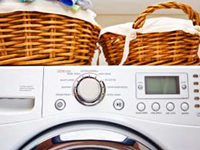
Are you drowning in monthly water bills? Palmquist and McCoy recommend money-saving options such as washing all clothing in cold water.

"I use cold water to wash clothes, and recently read that using the delicate cycle also saves water, too," Palmquist says.

In some cases, saving cash actually goes hand in hand with superior performance, Palmquist says.

"We installed a low-flow shower head in the main bathroom and find it not only saves water, but the flow is better than the old one," she says.

Of course, another "no-brainer" way to save is simply to use appliances less frequently. Wait until you have a full load before running the washing machine, dryer or dishwasher.

Don't overlook water-saving tips for outside the home. Palmquist plans to invest in a rain barrel for outside watering next year. Meanwhile, McCoy recommends making changes to landscaping "so there is less lawn to water."

Bundle or Drop Cable and Internet

McCoy suggests saving money by bundling cable and Internet services. Palmquist agrees, and recently switched to an "economy package" for her TV service.

However, Palmquist says it's important to look before you leap into bundling.

"Sometimes it's more expensive and they can lock you into a two-year contract, so check out everything first," she says.

If you're really gung-ho about saving, simply drop cable altogether. Perhaps you can watch your favorite TV shows for free on an Internet site such as Hulu.com.

Or, maybe it's time to simply give up those expensive TV habits and think about the priorities that really matter to you.

"My main advice is to think about wants and needs," Palmquist says. "Many of us think something's a necessity when really it's just a want."

Yahoo! Finance

Monday, November 22, 2010

Step by Step guide installing Ubuntu 10.10 on a Windows 7 System (Dual booting)

First I completely formatted the hard disk
Second I made three partitions in hard disk (C, D & E)
In partition C, I installed windows 7 (First windows should be installed in newly formatted hard disk)
And in partition E, I installed Ubuntu 10.10

For Installation Windows 7 here the step by step method

Setting up your computer and BIOS (Changes if Required)

When you start your computer put your Windows 7 DVD in DVD drive. And Restart

In most cases it will automatically boot in to the Windows 7 installation.

But in some cases Boot device order has to change.

BIOS it may boot you’re running operating system. In that case you will need to change the BIOS. You change the BIOS setting to boot from CD/DVD instead boot from hard drive.

Booting UP and First Installation steps

Installation of Windows 7 almost like Vista Installation type. But you have to care full read the descriptions in each time before clicking the NEXT button to avoid and disasters. There are options to choose in these steps you may find them with each images.

a) You choose your Language options by ‘Language to install’, ‘Time and Currency format’ and ‘Keyboard or input method’ here.

b) This screen is where the installation wizard begins. The install now options will leads to the

Advanced install options. For repairing a corrupt installation the ‘Repair your computer’ button

Located at the bottom-left can be used. For fresh installs just click the Install now button.

c)     Tick the ‘I accept the license terms’ checkbox and click ‘Next’ to proceed.

d) You will see a new box next in the you have two options 1. Upgrade and custom (advanced). 2. The custom install you have to go for second option that is “CUSTOM INSTALL”

e) Clicking on the ‘Custom’ button brings the install location selection screen.

Choose C partition to install windows 7 and click Format. Then click ‘Next’ to proceed.

Windows might create additional partitions for system files. This is a new feature in Windows 7 to have a small boot partition for system files.

f) Click Ok to continue.

g) Select the partition you just created and click next to continue.

The Windows 7 installation begins. Wait for 15 - 30 minutes for the all new OS! at installation time it will ask to give password, time setting etc.. Like in vista you have to give it.

How to install Ubuntu 10.10

After Windows 7 installation is over now you have to put your Ubuntu 10.10 CD in drive and restart your system.

It will open with welcome box. In that you have to press Install Ubuntu button

You will see a new box call preparing to install Ubuntu box. Just press Forward button.

Now you will see a new box in that you have to select “Install along side other operating system

Press Forward button.

You will see a new box of “Allocate drive space”: in that you will see a RED COLLUR “advanced partitioning tool” just press it.

Now you will see Allocate drive space.

Now you can see

Device                  Type                          Size                        Used

/dev/sda

/dev/sda1                ntfs                       104MB                    35MB

dev/sda 2                ntfs                  209609MB             18054 MB

dev/sda 3                ntfs                 157286 MB                3221MB

dev/sda 4                ntfs                  133106MB

(Note: - this information is my system hard drive information so in you system your hard drive information you will see)

So I selected /dev/sda 4 for Ubuntu 10.10.

If you just press on /dev/sda4 you will see three button enabled 1. Change 2.Delete 3. Revert

Just to to second button that is deleting after Delete you will see free space

Now just click on free space you will see one box Add

Press add button now it will open a box called Create Partition

Now you have to go Mount point box you will see

/, /boot, /home, /tmp, /usr, /var, /srv, /opt, /usr/local.

First you will go to /boot. Now you have to go “new Partition size in megabytes(1000000bytes);” and now give 4000 ( I have lot of space in my hard disk that way I given 4000 so you have to give as per Ubuntu manual instructions)   and press ok button

Now again you go to free space and press /home give 4000 and press OK like that you have to give all partitions. After all partitions allocated is over now you have to give /swap partition.

The size of /swap partitions is 2 times of your Ram (Exp:- RAM is 1 GB you have to give 2GB (2000) as /swap partitions

And finally / (ROOT) reaming available free space you have to give for / (ROOT) partition.

And press “Install Now” button

You will see a box “do you want to return to this partitions menu

Just press “Continue button”

After that you have to

Set Time and press forward button

Key board lay out “USA” press Forward button

Type you name   --> fill all filled and press Forward button

After installation is over restart the system

After Installation you will see a box in booting time in that you have to choose which operating system you have to run.
Booting box looks like this
GNU GRUB VERSION 1.98+20100804-5 Ubuntu3
Ubuntu,with Linux 2.6.35-22-generic
Ubuntu,with Linux 2.6.35-22-generic (Recovery mode)
Memory test (Memtest 86+)
Memory test (Memtest 86+ serial console 115200)
Windows 7 (loader) (on /dev/sda1)

In this way I have successfully installed windows7 and Ubuntu 10.10 on HP system in my office. Do the same thing and enjoy.

All the best

Allu John Sudhakar
System/Network Administrator
UCE, OU Osmania University

Friday, November 12, 2010

Hot Careers Through 2018 and Beyond

Find out which careers are expected to experience fast growth and offer plenty of opportunities.

By Yahoo! Education Staff

What are your top priorities for a new career?

-Good pay?
-Stability?
-Job security for the foreseeable future?

If a combination of all three is what you're looking for, you're in luck. Even in a tough job market, there are plenty of industries and jobs experiencing fast growth through 2018 - and beyond.

You can qualify for many of these jobs quickly with a degree or certificate program. Even better, you may not even have to leave your current job to do it, since many training programs are available online or on a part-time basis.

Are you ready to learn about some of the hottest careers? Check out these hot job opportunities through 2018 and beyond... then see how you can get started.

Hot Career #1: Accountant/Auditor

Accountants keep finances in order by taking care of things like overseeing cash flow and filing tax paperwork. Auditors analyze finances to ensure everything is being done according to the law.

Hot factors:

  • There were 1.3 million accountant and auditor jobs in 2008...
  • And the Department of Labor projects about 279,400 new positions to be added through 2018.
  • Changing financial laws, evolving regulations, and more detailed scrutiny of company finances mean fast job growth for accountants.

Training options:
Bachelor's degree in accounting
Bachelor's degree in finance

Median salary: $59,430

Hot Career #2: Medical Assistant

As a medical assistant in the growing health care field, you'll work to keep a hospital, clinic, or doctor's office running smoothly by keeping records and/or taking patients' vital signs.

Hot factors:

  • Medical assistants held a whopping 483,600 jobs in 2008, and that number is projected to grow...
  • In fact, medical assisting is one of the fastest growing jobs out there. The Department of Labor projects a 34 percent growth rate from 2008-2018.
  • More health care facilities are employing people who can do administrative as well as clinical work, which means more opportunities for medical assistants with the right training.

Training options:
Associate's degree in medical assisting
Medical assistant certificate program

Median salary: $28,300

Hot Career #3: Financial Examiner

As a financial examiner, you'll make sure that businesses follow financial laws and regulations. After recent financial scandals, there's lots of demand for workers who can help keep organizations finances in order and follow current regulations.

Why it's hot:

  • This job should grow much faster than average (41 percent more job openings) over the next few years.
  • Businesses are increasingly aware of the need to follow financial regulations.
  • More government oversight of the financial sector means more jobs.

Training options:
Bachelor's degree in accounting

Median salary: $70,930

Hot Career #4: Dental Assistant

Dental assistants should find lots of opportunities in this growing field to help patients care for their teeth and help the dentist with paperwork and equipment.

Why it's hot:

  • This in an in-demand job with 36 percent more openings predicted.
  • Population growth and increasing dental health for older people will drive the need for dental workers.
  • Dental patients are demanding flexible hours, so evening and weekend appointments mean more assistants will be needed.

Training options:
Associate's degree in dental assisting
Dental assistant certificate

Median salary: $32,380


Hot Career #5: Physical Therapist Assistant

If you want a stable career with rewarding work, this may be just the right fit for you. Assistants help patients recover after an injury or illness. They work directly with patients and perform support tasks like record-keeping.

Why it's hot:

  • As the baby boomers age, there will be more demand for physical therapy to recover from illness and injury.
  • Insurance companies are starting to cover more procedures, so more workers will be needed.
  • In fact, the Department of Labor expects to see fast growth in job openings for this position.

Training options:
Associate's degree in physical therapy
Physical therapy certificate

Salary: $46,140

Hot Career #6: Registered Nurse

Working in hospitals, clinics, and doctor's offices to keep patients healthy and treat illnesses and injuries is a job that's lucrative and fulfilling.

Why it's hot:

  • More emphasis on preventive care and aging baby boomers will drive demand.
  • Health care reform means more people will be insured, so more nurses will be needed.
  • Half a million new nurses will be needed by 2018.

Training options:
Associate's degree in nursing
Bachelor's degree in nursing
Nursing diploma

Median salary: $62,450


Hot Career #7: Computer Software Engineer, Applications

Designing and creating programs to run on digital devices - from laptops to cell phones - is a booming business. This field is expecting even further growth, especially in the mobile arena.

Hot factors:

  • It's one of the fastest growing careers... and with technology continually evolving, that's no surprise.
  • The Department of Labor predicts a 34 percent increase in jobs between 2008 and 2018.
  • They number of new jobs to be created: 175,100.

Training options:
Bachelor's degree in computer programming
Bachelor's degree in computer engineering

Median salary: $85,430

All salary data is from the U.S. Department of Labor, May 2008.

Thursday, November 4, 2010

10 Shocking Secrets of the First Year of Marriage (How Marriage Changes Things)

--By Marina Khidekel, BRIDES magazine
Think that your first year as newlyweds will be total bliss? Of course it will—but even paradise comes with surprises. Here's what to expect.
1. THE SHOCK: You'll gain a little love weight.
You've been dieting since the moment he put the ring on your finger. But chances are that celery-and-Fresca regimen will end as soon as the honeymoon begins. (Christening every Thursday "Pasta Madness"? Go for it!) "I starved myself for months to get in shape for the wedding—I even ordered my ring a size smaller to force myself to keep dieting," admits Melina M., 29, of Cambridge, Massachusetts. "Of course I've gained it all back—and a few extra pounds."
WHAT'S A COUPLE TO DO?
Putting on a bit of weight is normal for a newlywed. "Give yourself permission to enjoy your new life and the food that comes with it," says psychologist Elizabeth Lombardo, Ph.D., author of A Happy You: Your Ultimate Prescription for Happiness. But don't make chili-cheese dogs an everyday thing, or the pounds will keep piling on. Spanx has its limits.
2. THE SHOCK: Your B-list buds will go MIA.
You're a single girl with a tribe of friends. Once you're hitched, though, some may mysteriously vanish from the scene—unless you bribe them with Friday-night drinks.
WHAT'S A COUPLE TO DO?
If a friend is keen on getting married, jealousy may play a part, or she may be having a hard time dealing with a former free-agent pal's wanting to check in with her hubby before making plans. But don't worry—your closest girlfriends won't leave your side, especially if you make a conscious effort to keep them there.
3. THE SHOCK: Your sex life will be off the charts—sometimes.
After the honeymoon and a happy homecoming, life can turn, well...a bit PG. One night, you may just want to do the laundry. Or there will be a Project Runway marathon that you really, really want to watch. Before you know it, a week will have gone by since you and your spouse got romantic.
WHAT'S A COUPLE TO DO?
Nothing. Studies show that, over time, married people have more—and better—sex than singles do, says Scott Haltzman, author of The Secrets of Happily Married Women: "The sense of commitment helps loosen a couple's inhibitions and strengthens their sexual bond."
Related: 7 Financial Tips for Newlyweds from BRIDES Magazine's Editor-in-Chief
4. THE SHOCK: You won't unpack your china for six months.
Engaged girl's fantasy: kitchen shelves full of gleaming new china and stemware organized by color, pattern, and size. Married woman's reality: stacks of unpacked boxes in every corner.
WHAT'S A COUPLE TO DO?
Everyday things—working late, paying bills, taking the dog to the vet—will get in the way of setting up that idyllic space. Try this as a compromise: Open one box each week until you've achieved that sublime kitchen display. And then use the stuff!
5. THE SHOCK: You'll do the dishes; your husband will fix stuff.
It'll be like living in a Mad Men episode as you fall into clichéd roles—you're in charge of laundry; he hammers things. "One day, when our dryer's bell went off to signal that the clothes were done, my husband jumped a foot off the couch and shrieked, 'What was that noise?' That was when I realized he hadn't washed a sock since we'd been married," says Anna W., 28, of Austin, Texas.
WHAT'S A COUPLE TO DO?
Devise a plan, if you'd prefer to split chores 50–50. "Consider which chores each of you doesn't mind doing, and agree to divvy up the responsibilities in a way you both think is fair," says Lombardo. Studies show that when roles are clearly defined and equitable, everyone's happier.
6. THE SHOCK: Even though you'll have two paychecks, you'll still feel broke.
That "we'll have twice as much money" theory? Just an illusion. While you'll save on housing if you weren't living together before (and don't move someplace swankier), you'll also be spending more. For example, that hand-me-down couch was fine for a single gal, but now you'll want a nice sofa in a lovely home that looks as if grown-ups live there.
WHAT'S A COUPLE TO DO?
Don't fret too much, says Haltzman. The investments you're making now will pay off for decades to come, whether they're in furnishings, friendships (throwing dinner parties), or the future (loading up your retirement accounts).
7. THE SHOCK: You won't want to spend every moment with your new husband.
Your spouse may be your best friend, but he won't suddenly become your only friend.
WHAT'S A COUPLE TO DO?
"My husband and I have no problems maintaining individual friendships," says Meghan E., 29, of Richmond, Virginia. "The poor guy shouldn't have to be dragged to every new chick flick simply because he's married to me." She's right. Go out with the girls, and give him nights with his guys. You'll come home and swap stories—and your marriage will be the better for it.
See Also: 16 Surefire Ways to De-Stress
8. THE SHOCK: You'll go to bed mad, even though you vowed not to—ever.
Count on falling asleep fuming at least once that first year.
WHAT'S A COUPLE TO DO?
"It's okay if you're getting nowhere with a compromise," says Lombardo. "Forcing things will just make them worse." So don't be scared of getting some shut-eye. Most likely, you'll both wake up refreshed and ready to make up. Studies show the best predictor of a marriage's success is the couple's ability to repair the relationship after a fight, so as long as you resolve your conflict quickly, you can rest easy.
9. THE SHOCK: Being a wife won't mean you'll instantly have skills worthy of an Iron Chef.
"When I was single, I rarely turned on the stove in my studio apartment. Then I got a husband, new kitchen gear (all those shower gifts!), and my grandmother's take- care-of-your-man attitude," says Molly S., 32, of Baltimore.
WHAT'S A COUPLE TO DO?
Marriage vows are powerful, but they don't include instructions on how to make meatloaf. "I'd rush home from work and try to cook a spread worthy of a magazine photo shoot, but I couldn't take the pressure," says Molly. "Now making dinner might mean opening a bag of salad or a take-out menu," she says. "And we're both okay with that." Or you may find your husband grabbing the apron—now there's a win-win!
10. THE SHOCK: The world will feel like a better place.
Marriage is more than changing your last name and getting a joint checking account.
WHAT'S A COUPLE TO DO?
"Getting married is a declaration to the world that you want to be with each other forever, and a huge sense of security, devotion, peace, and love comes with that," says Lombardo. That intensity will not only deepen your bond but also give you quite a buzz. Says Krista N., 31, of New York City, "We were really supportive of each other before, but now that we're married, it feels like we're tackling life together, and that's a pretty great feeling."

Illustration by Kirsten Ulve

Tuesday, October 19, 2010

13 Ways to Never Get Cancer

Healthful lifestyle choices can dramatically lower your cancer risk. Here's exactly what—and what not—to do.

1. Filter Your Tap Water

You'll reduce your exposure to known or suspected carcinogens and hormone-disrupting chemicals. A new report from the President's Cancer Panel on how to reduce exposure to carcinogens suggests that home-filtered tap water is a safer bet than bottled water, whose quality often is not higher—and in some cases is worse—than that of municipal sources, according to a study by the Environmental Working Group. (Consumer Reports' top picks for faucet-mounted filters: Culligan, Pur Vertical, and the Brita OPFF-100.) Store water in stainless steel or glass to avoid chemical contaminants such as BPA that can leach from plastic bottles.

2. Stop Topping Your Tank

So say the EPA and the President's Cancer Panel: Pumping one last squirt of gas into your car after the nozzle clicks off can spill fuel and foil the pump's vapor recovery system, designed to keep toxic chemicals such as cancer-causing benzene out of the air, where they can come in contact with your skin or get into your lungs.

3. Marinate Meat Before Grilling

Processed, charred, and well-done meats can contain cancer-causing heterocyclic amines, which form when meat is seared at high temperatures, and polycyclic aromatic hydrocarbons, which get into food when it's charcoal broiled. "The recommendation to cut down on grilled meat has really solid scientific evidence behind it," says Cheryl Lyn Walker, PhD, a professor of carcinogenesis at the University of Texas M.D. Anderson Cancer Center. If you do grill, add rosemary and thyme to your favorite marinade and soak meat for at least an hour before cooking. The antioxidant-rich spices can cut HCAs by as much as 87%, according to research at Kansas State University.

30 Ways to cancer-proof your life.

4. Caffeinate Every Day

Java lovers who drank 5 or more cups of caffeinated coffee a day had a 40% decreased risk of brain cancer, compared with people who drank the least in a 2010 British study. A 5-cup-a-day coffee habit reduces risks of cancers of the pharynx and mouth almost as much. Researchers credit the caffeine: Decaf had no comparable effect. But coffee was a more potent protector against these cancers than tea, which the British researchers said also offered protection against brain cancer.

5. Water Down Your Risks

Drinking plenty of water and other liquids may reduce the risk of bladder cancer by diluting the concentration of cancer-causing agents in urine and helping to f lush them through the bladder faster. Drink at least 8 cups of liquid a day, suggests the American Cancer Society.

6. Load Up On Really Green Greens

Next time you're choosing salad fixings, reach for the darkest varieties. The chlorophyll that gives them their color is loaded with magnesium, which some large studies have found lowers the risk of colon cancer in women. "Magnesium affects signaling in cells, and without the right amount, cells may do things like divide and replicate when they shouldn't," says Walker. Just ½ cup of cooked spinach provides 75 mg of magnesium, 20% of the daily value.

Make it tonight: The perfect cancer-fighting salad.

7. Snack On Brazil Nuts

They're a stellar source of selenium, an antioxidant that lowers the risk of bladder cancer in women, according to research from Dartmouth Medical School. Other studies have found that people with high blood levels of selenium have lower rates of dying of lung and colorectal cancers. Researchers think selenium not only protects cells from free radical damage but may enhance immune function and suppress formation of blood vessels that nourish tumors.

8. Burn Off This Breast Cancer Risk Factor

Moderate exercise such as brisk walking 2 hours a week cuts risk of breast cancer 18%. Regular workouts may lower your risks by helping you burn fat, which otherwise produces its own estrogen, a known contributor to cancer.

9. Ask Your Doc About Breast Density

Women whose mammograms have revealed breast density readings of 75% or more have a cancer risk 4 to 5 times higher than that of women with low density scores, according to recent research. One theory is that denser breasts result from higher levels of estrogen—making exercise particularly important (see previous item). "Shrinking your body fat also changes growth factors, signaling proteins such as adipokines and hormones like insulin in ways that tend to turn off cancer-promoting processes in cells," Walker says.

12 Myths about breast cancer.

10. Skip The Dry Cleaner

A solvent known as perc (short for perchloroethylene) that's used in traditional dry cleaning may cause liver and kidney cancers and leukemia, according to an EPA finding backed in early 2010 by the National Academies of Science. The main dangers are to workers who handle chemicals or treated clothes using older machines, although experts have not concluded that consumers are also at increased cancer risk. Less toxic alternatives: Hand-wash clothes with mild soap and air-dry them, spot cleaning if necessary with white vinegar.

11. Head Off Cell Phone Risks

Use your cell phone only for short calls or texts, or use a hands-free device that keeps the phone—and the radio frequency energy it emits—away from your head. The point is more to preempt any risk than to protect against a proven danger: Evidence that cell phones increase brain cancer risk is "neither consistent nor conclusive," says the President's Cancer Panel report. But a number of review studies suggest there's a link.

The most powerful cancer fighting foods you can eat.

12. Block The Sun With Color

Choosing your outdoor outfit wisely may help protect against skin cancer, say Spanish scientists. In their research, blue and red fabrics offered significantly better protection against the sun's UV rays than white and yellow ones did. Don't forget to put on a hat: Though melanoma can appear anywhere on the body, it's more common in areas the sun hits, and University of North Carolina at Chapel Hill researchers have found that people with melanomas on the scalp or neck die at almost twice the rate of people with the cancer on other areas of the body.

13. Eat Clean Foods

The President's Cancer Panel recommends buying meat free of antibiotics and added hormones, which are suspected of causing endocrine problems, including cancer. The report also advises that you purchase produce grown without pesticides or wash conventionally grown food thoroughly to remove residues. (The foods with the most pesticides: celery, peaches, strawberries, apples, and blueberries.) "At least 40 known carcinogens are found in pesticides and we should absolutely try to reduce exposure," Sellers says.

Provided by Prevention from MSN Health

Friday, October 15, 2010

4 Steps to Find The Carrier You Love

Below find the framework of a "career business plan." Use it to find a career that you will love.

1. Set a goal
· First-time job seeker: You need experience. Be concerned only with getting it. Discount higher salaries or even somewhat unpleasant duties. Investigate where you can best get on-the-job training. Visualizing opportunities ahead is energizing.
· Career experienced: Expand your list of available jobs and their descriptions. Based on your current experience, explore which recommended careers are best-suited to your career path. Look for a niche that's not saturated with other applicants.
· Student: As you read about each career, answer the question, "What would you love to do?" Transfer your idea into both a long-term and a short-term plan.  Then, choose a curriculum that will land that first job.

2. Create a success-driven mindset
It all starts with you. When you feel confident about your future, others respond with positive offers of opportunity and support. Here are ways to create a successful mindset:
· Say no to ego-driven goals: Avoid status-driven self-proclamations.  View each career in the light of how much you would enjoy day-to-day tasks. If you choose a glamorous career, be aware that it's very competitive.
· Link careers: Where do you want to be in five years? Ten years?  Create a career growth plan. For example: secretaryexecutive administrative assistantoffice manager. Success in the real world is a step-by-step process. Build your step-by-step résumé with enthusiasm and doors will open.
· View career choices as an investment:  Don't snub the low-wage occupations or take the highest-paying career choices. Instead look at the long-term training benefits. Where will it take you?   
· Seek work that looks fun: Job enjoyment creates competency, and that translates into success and further opportunities. Ask yourself, "Would this career be fun?"  Even if you've already worked at a particular job and it didn't pan out at the time, it might still lead to a great career with another employer.

3. Make a plan
Imagine you are actually working in each listed occupation that's of interest. Ask yourself, "Would this job be fun and easy to do or learn?" If so, it could be the best path for you.
· Select five short-term jobs:  Be realistic. Which five occupations can you competitively interview for right now, based on your education and experience?
· Select five long-term careers:  Think big. What five careers can you qualify for in five or 10 years?  Don't form an opinion until you have reviewed all of your options. Assign the highest rank to those job descriptions that are most appealing.
· Select only the high-growth occupations: Getting that perfect career is something of a gamble. Increase your odds of winning by selecting only the high-growth job descriptions.
· Get the facts: Read about each occupation that "appears" to be enjoyable. Then, be totally honest with yourself. Which day-to-day career lifestyle would really suit you best? One place to start is http://www.bls.gov/soc/.

4.  Just do it
Get disciplined and don't allow self-doubt to keep you from moving forward.
· It's not personal: Don't let false pride slow you down. Get your face or résumé in front of every friend or prospective career opportunity.
· Run the numbers: Get as many interviews and résumés sent as possible. Make it fun! Run up the numbers. 
· Be proud of every "No": Don't fret over rejections; it will only diminish your self-confidence

Wednesday, October 6, 2010

How to Clear Visited Websites from the Browser

There are a couple of ways to remove visited sites.

1. To remove all visited websites go to:

Tools > Options > Privacy and select the tab History.

Click on the button Clear Browsing History Now.

2. To remove specific websites:

Start typing the URL in the location bar e.g. http://www.microsoft.com.

If you've visited the website before a pull down list will appear underneath the location bar.

You can select the sites you want to delete using the mouse or arrow keys. To delete press Shift + Del.

For multiple deletion(s) you can keep Shift + Del pressed and it will continue deleting all entries in the list
Sent from my BlackBerry® 9700 smartphone from MTN Ghana

Monday, September 6, 2010

How to Install Drivers in Microsoft® Windows® on Dell Systems

Install Drivers in This Order in Windows

The drivers for your Dell computer can be installed from the ResourceCD/DVD or from the Dell Drivers and Downloads page.

Actual system configurations may vary. The list below is an overview of the correct order to install drivers on Dell desktop and laptop systems. After reinstalling the operating system, follow the order listed when reinstalling drivers. It is recommended that you print this list for referral when installing drivers.

Note:

To select the correct drivers, you need to know what components are installed on your computer. To find out what components are installed on your computer, refer to the Dell Knowledge Base Article: "How to Determine Which Components are in Your Computer" Article ID: 324898.

  1. Desktop System Software (DSS) or Notebook System Software (NSS) - A vital utility that provides critical updates and patches for the operating system. If you are reinstalling the operating system or updating all the computer’s drivers, it is imperative that this software be installed first. Currently, the DSS and NSS are not required for systems with Windows Vista installed. This is located under the System and Configuration Utilities Category on the Drivers and Downloads page.

  2. Chipset - Helps Windows control system board components and controllers. This is located under the Chipset Category on the Drivers and Downloads page.

  3. Video Adapter - Enhances video performance. This is located under the Video Adapter Category on the Drivers and Downloads page.

  4. Network Interface Card (NIC) - Enhances the network controller for Internet or network access. This is located under the Network Category on the Drivers and Downloads page.

  5. Audio Adapter - Enables and enhances the audio controller. This is located under the Audio Category on the Drivers and Downloads page.

  6. Modem - Allows dialup capability. This is located under the Communication Category on the Drivers and Downloads page.

  7. Wireless Network Card - Enables and enhances the wireless network controller. This is located under the Network Category on the Drivers and Downloads page.

  8. Touchpad, Pointer, Trackstick, Mice, and Keyboards - Enhances the pointing device features. This is located under the Mouse & Keyboards Category on the Drivers and Downloads page.

  9. Other Devices

    • Bluetooth® Module
      This is located under the Communication Category on the Drivers and Downloads page.
    • Dell Wireless Mobile Broadband Cards
      This is located under the Communication Category on the Drivers and Downloads page.
    • PCMCIA/Smartcard controller
      This is located under the Security Category on the Drivers and Downloads page.

You can download the latest drivers for the list above from the Dell Drivers and Downloads page.  It is recommended that you print this driver order list before starting the download process on the Dell Drivers and Downloads page.

dell support

Sunday, August 1, 2010

5 Nutrients You're Not Getting Enough Of

Vitamin D

This vitamin's biggest claim to fame is its role in strengthening your skeleton. But vitamin D isn't a one-trick nutrient: A study in Circulation found that people deficient in D were up to 80 percent more likely to suffer a heart attack or stroke. The reason? D may reduce inflammation in your arteries.
The shortfall: Vitamin D is created in your body when the sun's ultraviolet B rays penetrate your skin. Problem is, the vitamin D you stockpile during sunnier months is often depleted by winter, especially if you live in the northern half of the United States, where UVB rays are less intense from November through February. Case in point: When Boston University researchers measured the vitamin D status of young adults at the end of winter, 36 percent of them were found to be deficient.
Hit the mark: First, ask your doctor to test your blood levels of 25-hydroxyvitamin D. "You need to be above 30 nanograms per milliliter," says Michael Holick, M.D., Ph.D., a professor of medicine at Boston University. Come up short? Take 1,400 IU of vitamin D daily from a supplement and a multivitamin. That's about seven times the recommended daily intake for men, but it takes that much to boost blood levels of D, says Dr. Holick.

Magnesium

This lightweight mineral is a tireless multitasker: It's involved in more than 300 bodily processes. Plus, a study in the Journal of the American College of Nutrition found that low levels of magnesium may increase your blood levels of C-reactive protein, a key marker of heart disease.
The shortfall: Nutrition surveys reveal that men consume only about 80 percent of the recommended 400 milligrams (mg) of magnesium a day. "We're just barely getting by," says Dana King, M.D., a professor of family medicine at the Medical University of South Carolina. "Without enough magnesium, every cell in your body has to struggle to generate energy."
Hit the mark: Fortify your diet with more magnesium-rich foods, such as halibut and navy beans. Then hit the supplement aisle: Few men can reach 400 mg through diet alone, so Dr. King recommends ingesting some insurance in the form of a 250 mg supplement. One caveat: Scrutinize the ingredients list. You want a product that uses magnesium citrate, the form best absorbed by your body.

Vitamin B12

Consider B12 the guardian of your gray matter: In a British study, older people with the lowest levels of B12 lost brain volume at a faster rate over a span of 5 years than those with the highest levels.
The shortfall: Even though most men do consume the daily quota of 2.4 micrograms, the stats don't tell the whole story. "We're seeing an increase in B12 deficiencies due to interactions with medications," says Katherine Tucker, Ph.D., director of a USDA program at Tufts University. The culprits: acid-blocking drugs, such as Prilosec, and the diabetes medication metformin.
Hit the mark: You'll find B12 in lamb and salmon, but the most accessible source may be fortified cereals. That's because the B12 in meat is bound to proteins, and your stomach must produce acid to release and absorb it. Eat a bowl of 100 percent B12-boosted cereal and milk every morning and you'll be covered, even if you take the occasional acid-blocking med. However, if you pop Prilosec on a regular basis or are on metformin, talk to your doctor about tracking your B12 levels and possibly taking an additional supplement

Potassium

Without this essential mineral, your heart couldn't beat, your muscles wouldn't contract, and your brain couldn't comprehend this sentence. Why? Potassium helps your cells use glucose for energy.
The shortfall: Despite potassium's can't-live-without-it importance, nutrition surveys indicate that young men consume just 60 percent to 70 percent of the recommended 4,700 mg a day. To make matters worse, most guys load up on sodium: High sodium can boost blood pressure, while normal potassium levels work to lower it, says Lydia A. L. Bazzano, M.D., Ph.D., an assistant professor of epidemiology at Tulane University.
Hit the mark: Half an avocado contains nearly 500 mg potassium, while one banana boasts roughly 400 mg. Not a fan of either fruit? Pick up some potatoes—a single large spud is packed with 1,600 mg

Iodine

Your thyroid gland requires iodine to produce the hormones T3 and T4, both of which help control how efficiently you burn calories. That means insufficient iodine may cause you to gain weight and feel fatigued.
The shortfall: Since iodized salt is an important source of the element, you might assume you're swimming in the stuff. But when University of Texas at Arlington researchers tested 88 samples of table salt, they found that half contained less than the FDA-recommended amount of iodine. And you're not making up the difference with all the salt hiding in processed foods—U.S. manufacturers aren't required to use iodized salt. The result is that we've been sliding toward iodine deficiency since the 1970s.
Hit the mark: Sprinkling more salt on top of an already sodium-packed diet isn't a great idea, but iodine can also be found in a nearly sodium-free source: milk. Animal feed is fortified with the element, meaning it travels from cows to your cereal bowl. Not a milk man? Eat at least one serving of eggs or yogurt a day; both are good sources of iodine

Read more: http://www.menshealth.com/mhlists/five-essential-nutrients/Magnesium.php#ixzz0vL014txJ

Monday, July 19, 2010

6 Great Foods for Men

Nutrition tips to improve mood, memory, muscles and more

Listen up, guys. If you'd like to improve your mood, memory, muscles and more, forget expensive and potentially risky supplements. Just head to your local supermarket. You'll find foods that help prevent age-related health conditions. As an added bonus, they all taste great and are easy to incorporate into your diet.

Sardines for heart health

Ounce for ounce, sardines are one of the best sources for heart-healthy omega-3 fatty acids and are extremely low in contaminants such as mercury and PCBs. They're also eco-friendly, packed with protein and low in saturated fat. Canned versions are inexpensive, portable and don't require refrigeration. Choose no-salt-added brands, and keep the bones in for a third of your recommended daily calcium. Sardines are great on salads or layered on top of whole-grain crackers.

Brazil nuts for prostate health

Brazil nuts are one of the richest food sources of selenium, a mineral that may reduce a man's risk of developing prostate cancer. Selenium may be toxic if taken in daily doses of more than 400 micrograms (mcg). But one Brazil nut has about 100 mcg. One or two mixed with other nuts each day will give you just the right amount.

Edamame for mood

Mood is affected by a combination of factors, including brain chemistry, life events and the foods you eat. Of these, only diet is under your control. Fiber-rich carbohydrates such as oats and edamame (green soybeans in the pod) help prevent mood fluctuations by keeping your blood-sugar levels steady. Edamame also contain protein, which further helps stabilize blood sugar, and omega-3 fatty acids, which have been shown to help combat depression. You can find them in just about any Japanese restaurant. They often come heavily salted, so request them "nude" or lightly coated. You also can buy frozen edamame pods at health-food stores and many supermarkets. Take 'em home, boil, drain and enjoy!

Sesame seeds for sex drive

They're inexpensive, safe, and don't require a prescription. They're also very rich in the amino acid arginine, which is involved in synthesizing nitric oxide, a compound that enhances blood flow through the arteries and—ahem—to various other male body parts. Toasted sesame seeds add a nice nutty taste to salads, cooked grains or cereal. You also can enjoy them in hummus, which is made with ground chickpeas and sesame seed paste (called tahini).

Blueberries for memory

These days, it seems you can't say enough about the health benefits of blueberries. But did you know that much of their power lies in their color? That deep blue hue is caused by flavonoids—natural compounds that protect the brain's memory-carrying cells (neurons) from the negative effects of oxidation and inflammation. Buy firm-fleshed berries or, off-season, try frozen, unsweetened varieties. Eat with plain yogurt, as a topping for cereal or right out of the bowl.

Lentils for energy

Rich in fiber and protein—both of which are digested slowly—lentils provide a steady source of energy. They're also a good source of several B vitamins essential to energy production, as well as iron, which helps red blood cells carry oxygen. Try whipping up a big batch of lentil soup and you'll have a hearty lunch for days.